
Sundarar
Sundarar (Tamil: சுந்தரர், romanized: Cuntarar), also referred to as Chuntarar, Chuntaramurtti, Nampi Aruran or Tampiran Tolan, was an eighth-century poet-saint of Tamil Shaiva Siddhanta tradition of Hinduism. He is among the Tevaram trio, and one of the most prominent Nayanars, the Shaiva bhakti (devotional) poets of Tamil Nadu.[1][2]
His hymns form the seventh volume of the Tirumurai, the twelve-volume compendium of Shaiva Siddhanta. His songs are considered the most musical in Tirumurai in Tamil language.[3] His life and his hymns in the Tevaram are broadly grouped in four stages. First, his cancelled arranged marriage through the intervention of Shiva in the form of a mad petitioner and his conversion into a Shaiva devotee.[4] Second, his double marriage to temple dancers Paravai and Cankali with their stay together in Tiruvarur.[5] Third, his blindness and then return of his sight. Finally, his reflections on wealth and material goods.[4]
Tiru Neelakanta
Ilayankudi Maranar
Ilayankudi Maranar (also spelt as Ilayangudi Maranar), also known Ilaiyangudi Nayanar, Ilaiyankuti Nayanar, Ilayangudi Mara Nayanar (Ilaiyangudi Mara Nayanar, Ilayankudi Mara Nayanar), is a Nayanar saint, venerated in the Hindu sect of Shaivism. He is generally counted as the fourth in the list of 63 Nayanars.[1] He is also called Marar, Maran and Mara Nayanar, names he shares with Somasi Mara Nayanar. The two Nayanars are generally differentiated by the prefixes "Ilayankudi" and "Somasi".
Viralminda
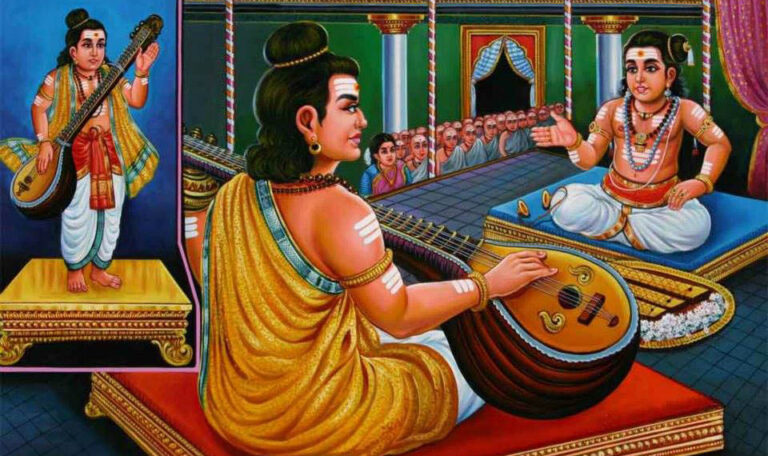
Viralminda Nayanar, also known as Viranmindar (Viranmintar), Viranmintan and Viranminda Nayanar (Viranminta Nayanar), is a Nayanar saint, venerated in the Hindu sect of Shaivism. He is generally counted as the sixth in the list of 63 Nayanars.[1] He was a contemporary of Sundarar (8th-9th century CE). He along with Cheraman Perumal Nayanar are the two Nayanars from Kerala (Malayala Nadu). Viralminda Nayanar is described in legends as the reason Sundarar composed a hymn to the Nayanar saints, which became the first compilation of the list.
Yenathinatha Nayanar
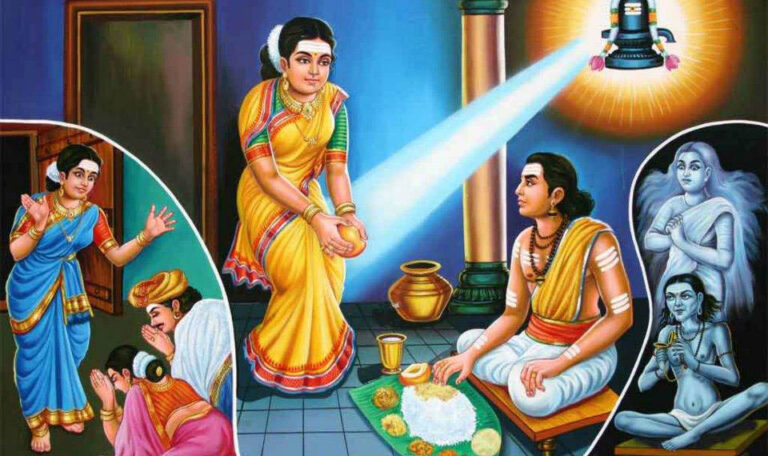
Yenathinathar, also known as Yenatinata, Yenathi Nayanar, Yenadhinatha, Yenadinath, Yenadinatha Nayanar and Yenadhinatha Nayanar, was a Nayanar saint hailing from ezhakula Nadar clan,[1] venerated in the Hindu sect of Shaivism. He is generally counted as the ninth in the list of 63 Nayanars.[2] In 1901, P.Sv. Perumal Nadar formed Srimath Yenathinadha Nayanar Thirumadalayam at Aruppukottai
Kannappa
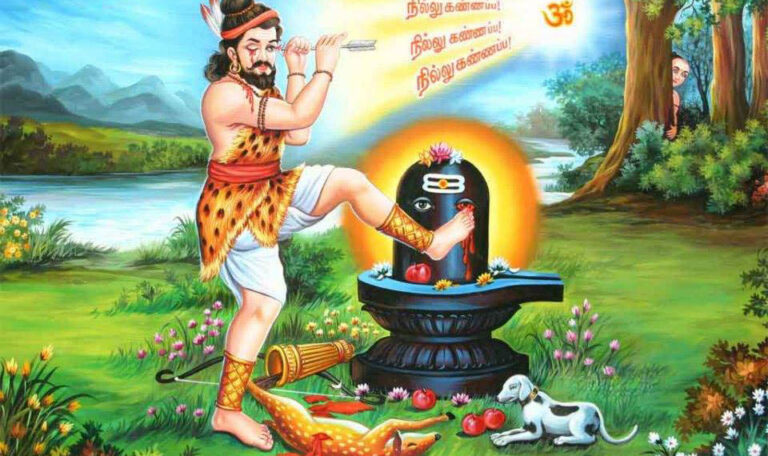
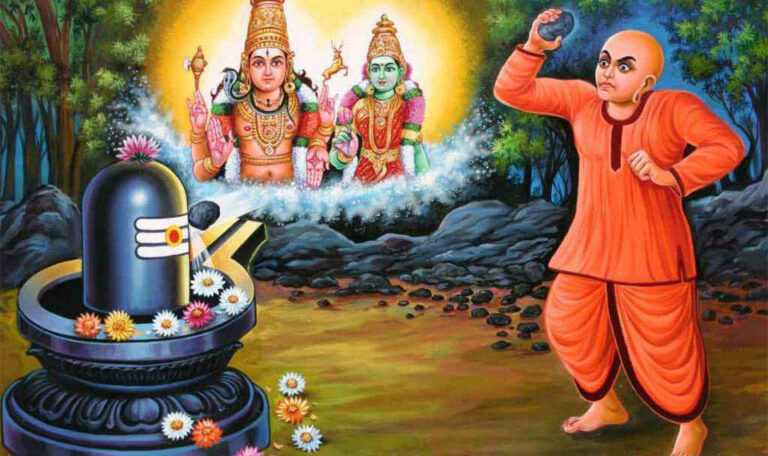
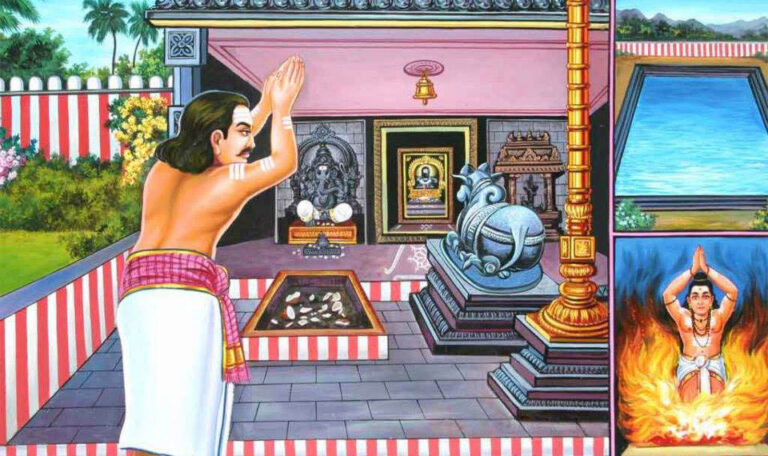
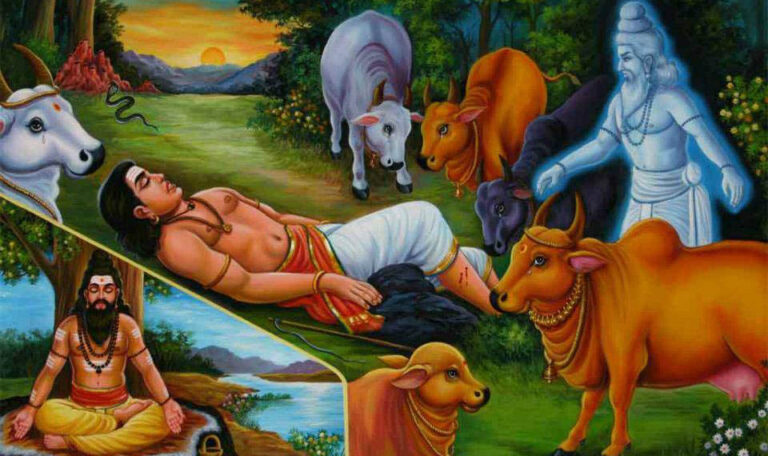
Kannappa, also known as Kannappa Nayanar[1], is a legendary figure in both Telugu and Tamil folklore renowned for his unwavering devotion to the Hindu god Shiva. His legend is closely associated with the Srikalahasteeswara Temple in Andhra Pradesh, India. According to folklore, Kannappa, a hunter, plucked out his eye as an offering to a Shiva Lingam. Before he could sacrifice his other eye, Shiva appeared.[2][3] [4]
Kannapa was born in a hunter's family, specifically from the Boya tribe, known for their hunting skills.
Kungiliya Kalaya Nayanar
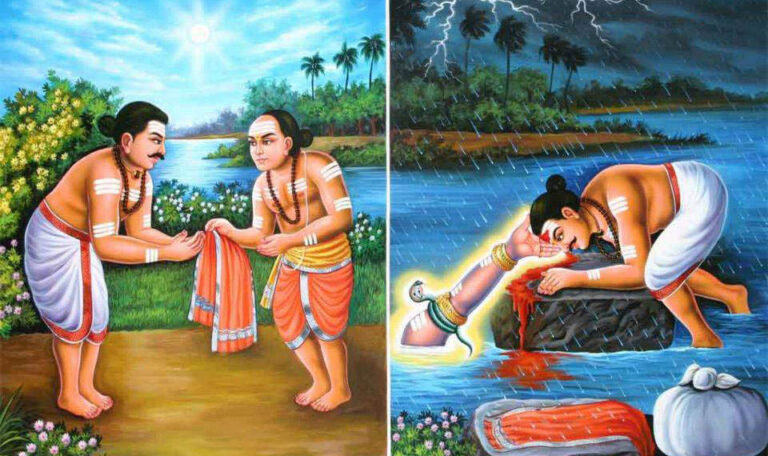
Kungiliya Kalaya Nayanar (also spelt as Kunguliya Kalaya Nayanar, Kungulia Kalaya Nayanar), also known as Kungiliya Kalaya (Kunguliya Kalaya), Kalayar (Kalaya, Kalayan), Kunguliya and Kalaya Nayanar, is a Nayanar saint, venerated in the Hindu sect of Shaivism. He is generally counted as the eleventh in the list of 63 Nayanars.[1]
Manakanchara Nayanar
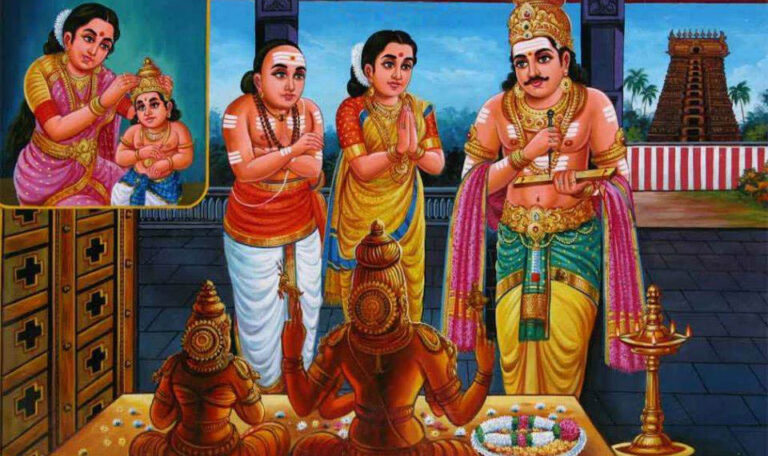
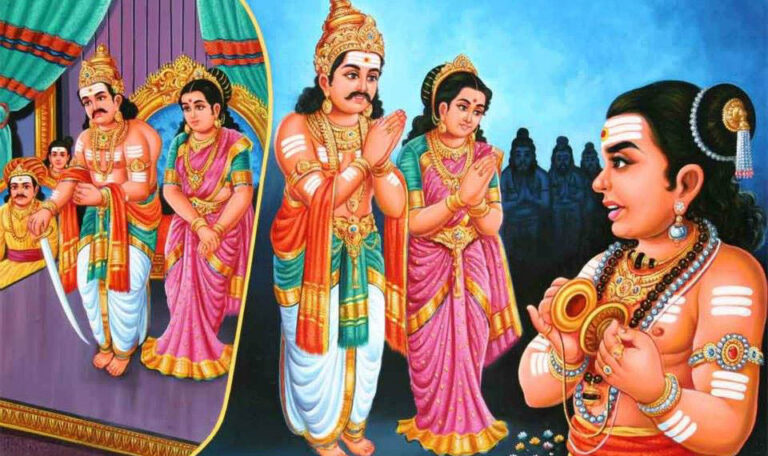
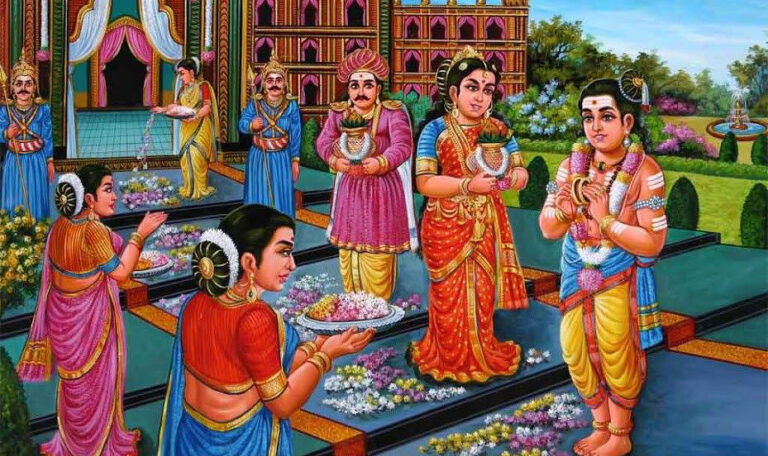
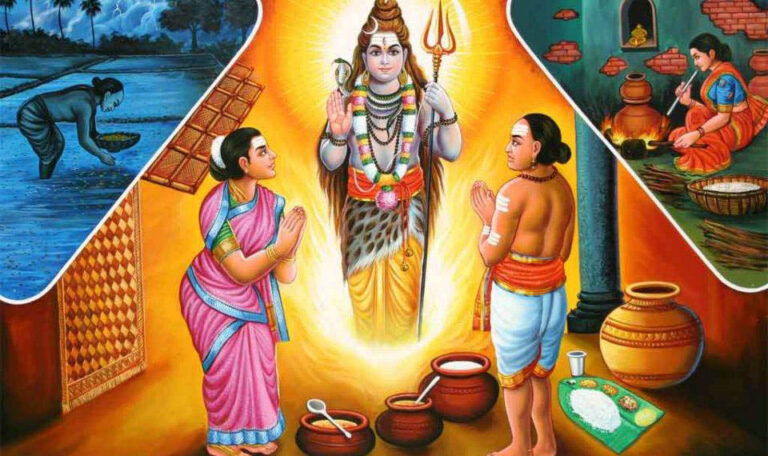
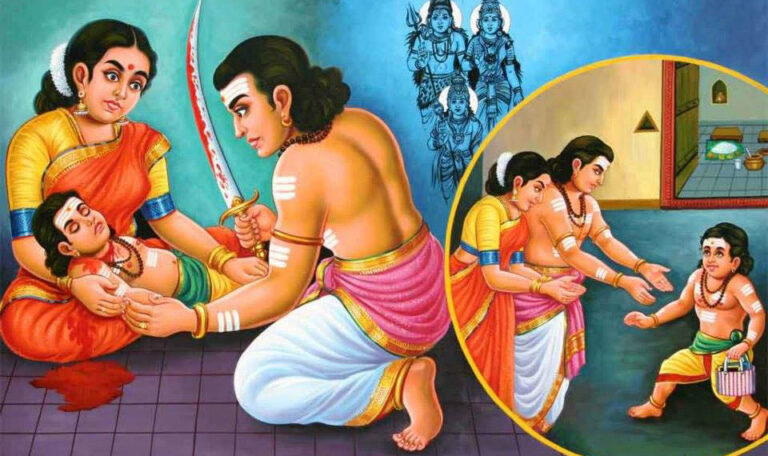
Manakanchara Nayanar, also known as Manakkanychaara Nayanar, Manakkancharar, Manakanjara Nayanar, Mankkanjara Nayanar and Manakkanjarar, was a Nayanar saint, venerated in the Hindu sect of Shaivism. He is generally counted as the twelfth in the list of 63 Nayanars.[1] Like other Nayanars, he was a fervent devotee of the god Shiva. Manakanchara Nayanar is dated to the 8th century and was a contemporary of Eyarkon Kalikkama Nayanar, a Nayanar saint and his son-in-law as well as Sundarar. He is described to have cut his daughter's hair and given it to Shiva disguised as a Shaiva ascetic, on her wedding day.
Anaya Nayanar
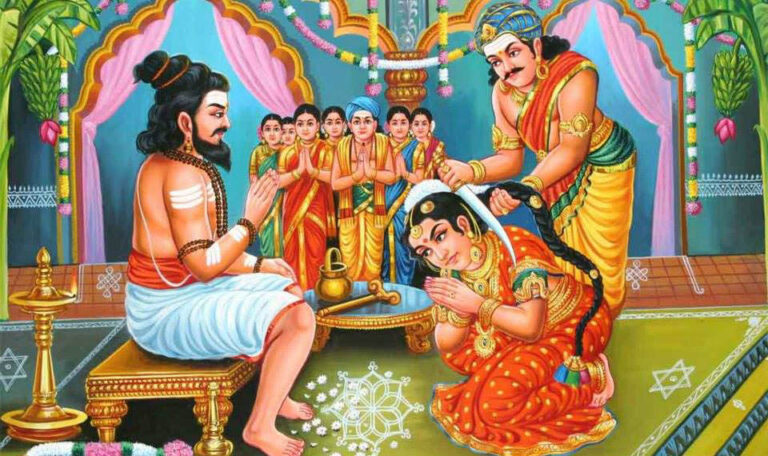
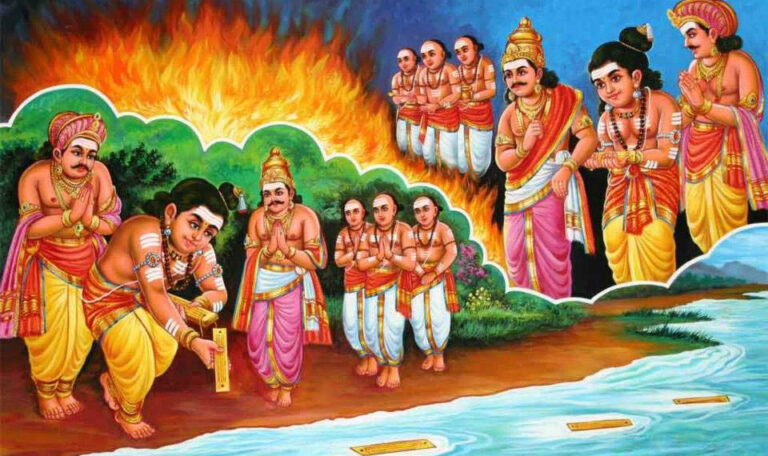
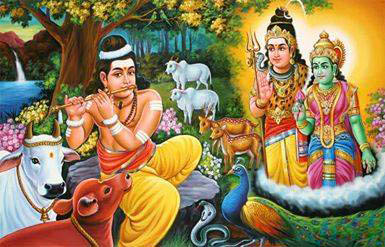
Anaya Nayanar, also known as Anaya and Anayar, is a Nayanar saint, venerated in the Hindu Shaivite sect. Anaya is considered to be the 14th of the 63 Nayanars. His playing of the Panchakshara (five-syllable mantra) on his flute so pleased the god, Shiva, that he took Anaya away to the eternal world.[1]
Muruga Nayanar
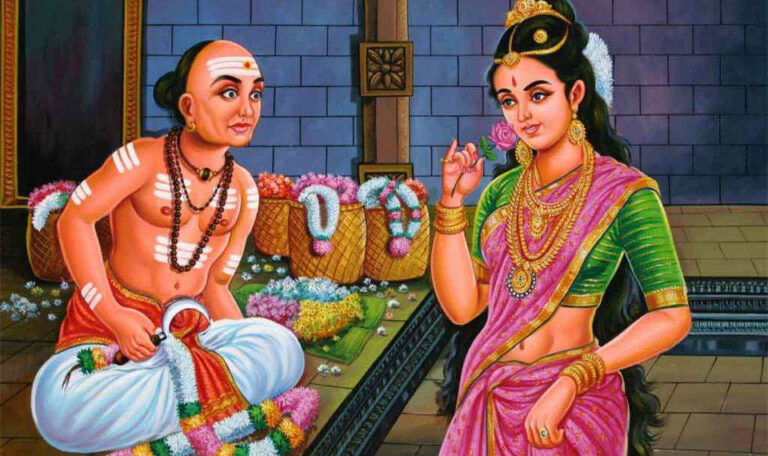
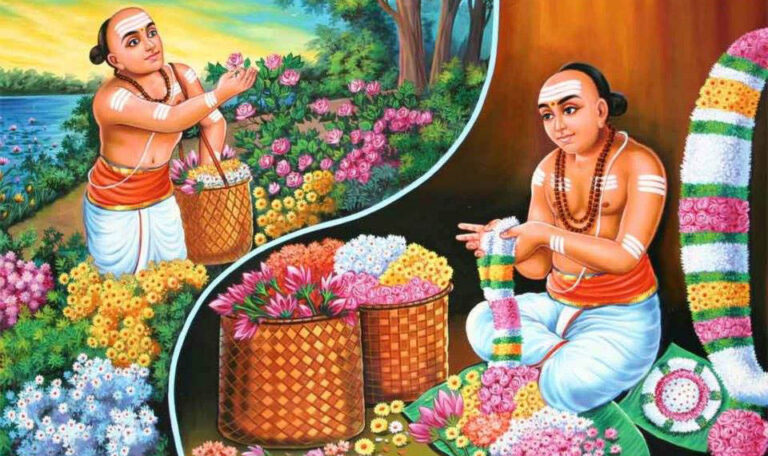
Muruga Nayanar or Muruka Nayanar is the 15th Nayanar saint. Traditional hagiographies like Periya Puranam (13th century CE) and Thiruthondar Thogai (10th century CE) describe him as a great devotee of the Hindu god Shiva. He is described to have lived an ascetic life, filled with austerity and selfless devotion to Shiva, spending his time in collecting flowers from woodlands and decorating the Shiva Lingam with garlands and coronets.
Rudra Pasupathi Nayanar
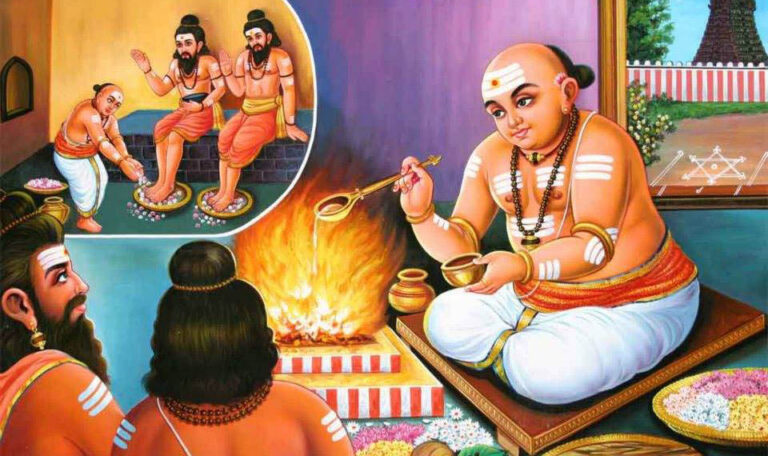
Rudra Pasupathi Nayanar is the 16th Nayanar saint. Traditional hagiographies like Periya Puranam (13th century CE) and Thiruthondar Thogai (10th century CE) detail his legendary life and services to the Hindu god Shiva. Pasupathi Nayanar was a learned Brahmin devotee who practised chanting of the Shri Rudram Chamakam, a Vedic hymn dedicated to Rudra (a form of Shiva). Therefore, he is known by the name Rudra Pasupathi Nayanar.[1]
Nandanar
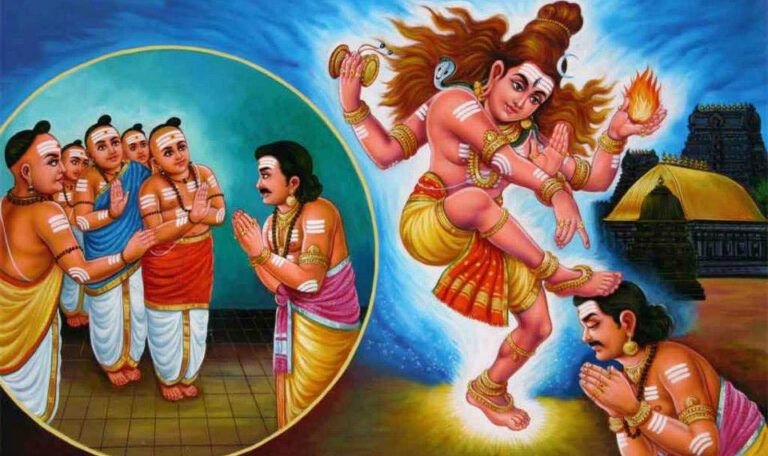
Nandanar (also spelt as Nantanar), also known as Thirunaallaippovaar (transl. The one who will go tomorrow) and Tirunallaipovar Nayanar,[note 1] was a Nayanar saint, who is venerated in the Hindu sect of Shaivism. He is the only Dalit saint in the Nayanars. He is generally counted as the eighteenth in the list of 63 Nayanars.[1] Like the other Nayanars, he was a devout devotee of the god Shiva.
Tiru Kurippu Thonda Nayanar
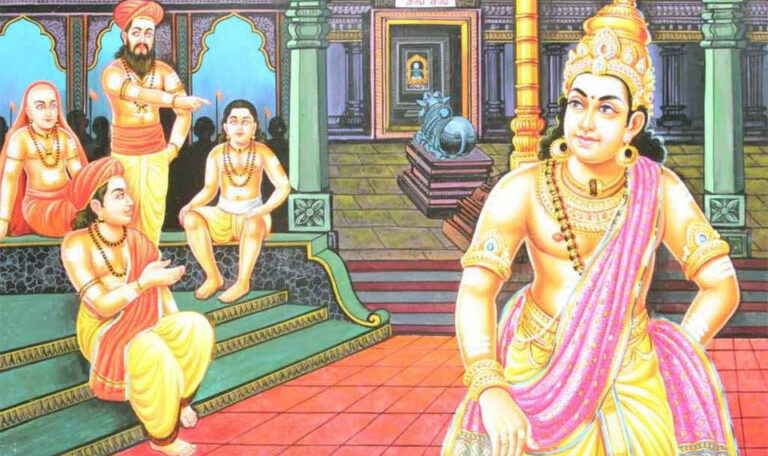
Tiru Kurippu Thonda Nayanar or Thiru Kurippu Thonda Nayanar (Tamil: திருக்குறிப்புத் தொண்ட நாயனார், Tirukkuṟipput Toṇṭa Nāyaṉār) is one of the Nayanars, 63 devotees to the Hindu god Shiva who are revered as saints in Shaivism.[1] His life is recorded in traditional hagiographies like Periya Puranam (13th century CE), Tirutoṇṭar Antādi (10th century CE) and Thiruthondar Thogai (8th century CE). The saint was serving the Shiva devotees by reading their facial expressions and understanding their actual needs. This service earned him the name Tiru Kurippu Thonda Nayanar: Thiru is an honorific term in Tamil; Kurippu means "expressions" in general, and "facial expressions" in particular; and Thondar means "voluntary servant".
Chandeshvara Nayanar
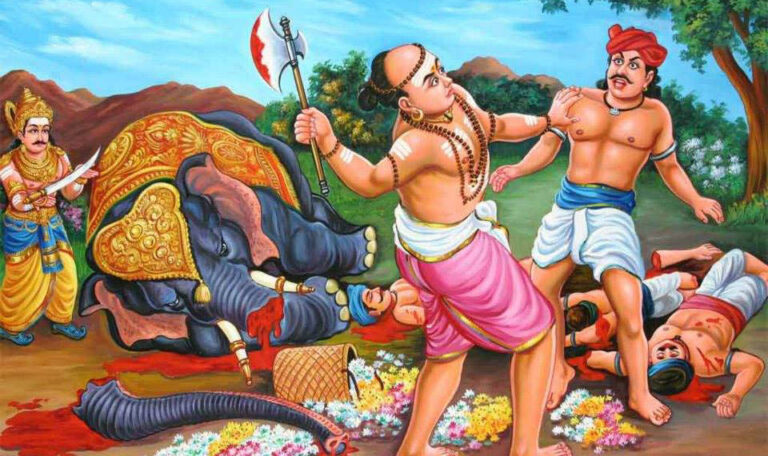
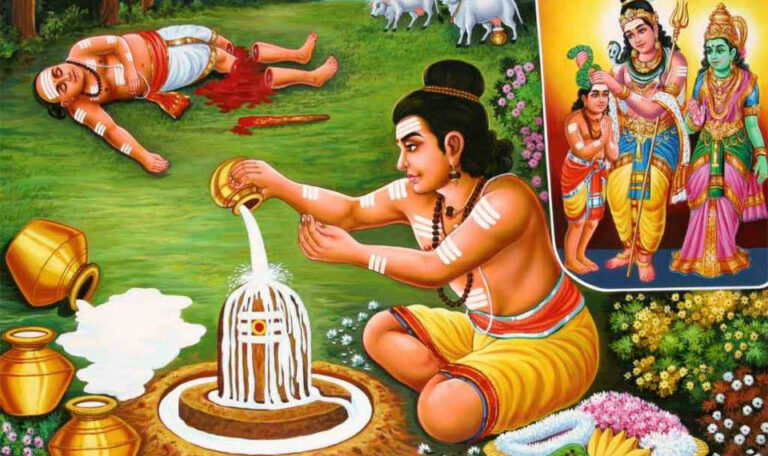
Chandesha or Canda or Chandikeshwara is one of the 63 Nayanars. Processional bronze images of him generally show him as a boy, with entwined locks of hair, standing with his hands in Añjali Mudrā and with an axe in the crook of his arm. In the Shaiva temples of South India, his shrine is positioned within the first enclosure wall of the temple complex and to the North East of the lingam. He is there typically shown seated, with one leg dangling downwards, a hand on one thigh and an axe clasped in the other. He faces inwards towards the main temple wall. He is depicted as deeply lost in meditation, and devotees snap their fingers or clap their hands to attract his attention. Another explanation, since he is considered to be the guardian of the temple belongings, is that devotees clap their hands to show that they are leaving the temple empty-handed. It is also customary to leave even the sacred ash inside the temple itself.
His original role was probably that of recipient of nirmālya, that is to say of offerings of food and garlands that had originally been offered to Shiva.[1]
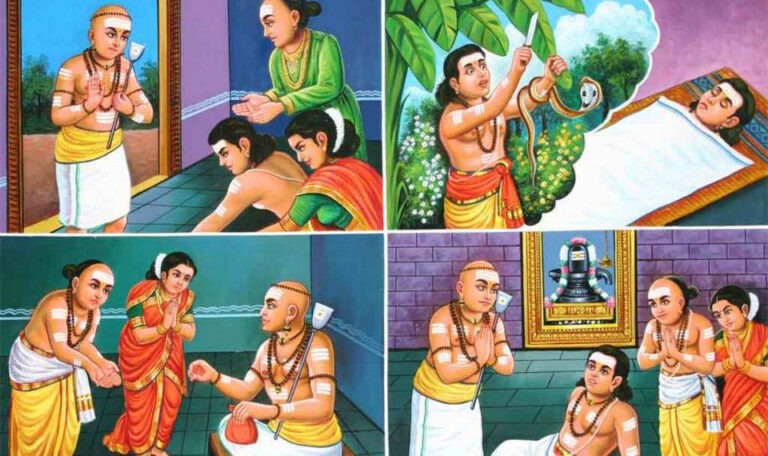
Appar
Appar (Tamil: அப்பர்) also referred to as Tirunavukkaracar (Tamil: திருநாவுக்கரசர், romanized: Tirunāvukkaracar) or Navukkarasar, was a seventh-century Tamil Shaiva poet-saint. Born in a peasant Shaiva family, raised as an orphan by his sister, he lived about 80 years and is generally placed sometime between 570 and 650 CE.[1][2] Appar composed 4,900 devotional hymns to the god Shiva, out of which 313 have survived and are now canonized as the 4th to 6th volumes of Tirumurai.[3] One of the most prominent of the sixty-three revered Nayanars, he was an older contemporary of Sambandar.[1][4]
His images are found and revered in Tamil Shiva temples. His characteristic iconography in temples show him carrying a farmer's small hoe – a gardening tool and weed puller.[1]
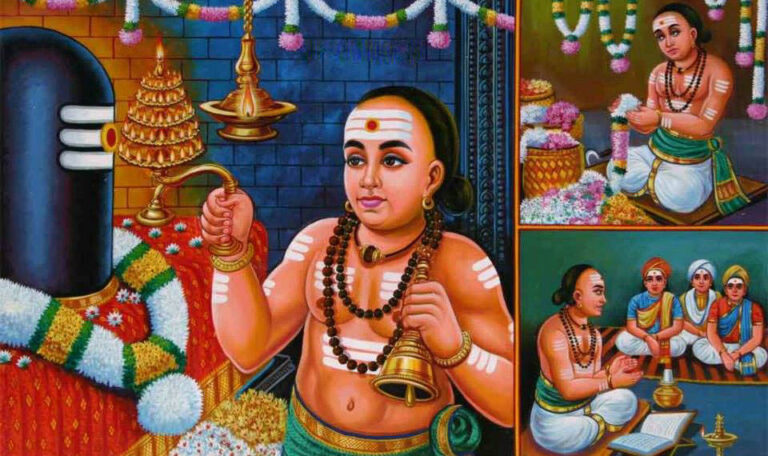
Kulachirai Nayanar
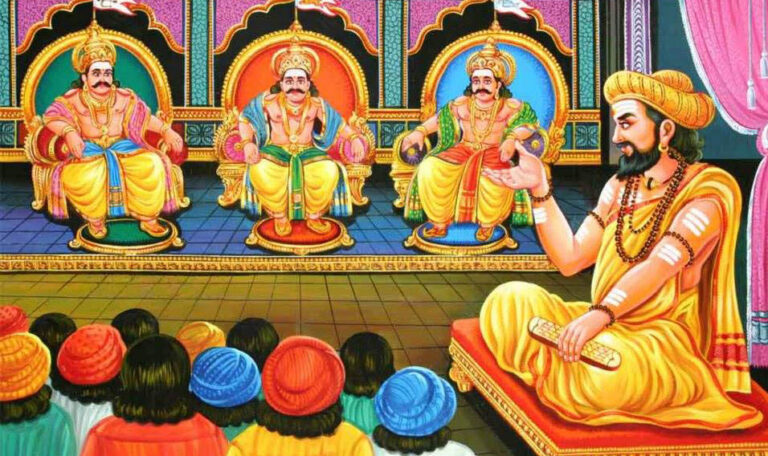
Kulachirai Nayanar was a minister of the Pandyan king, Koon Pandyan, and one of the 63 Nayanars mentioned in the Periya Puranam.[1]
Kulachirai Nayanar was born into a noble family in Manamelkudi in the Pandyan Kingdom. He became the Prime Minister of the Pandyan King Koon Pandiyan. He was well known for being hospitable to Shaivite saints and poets.[2]
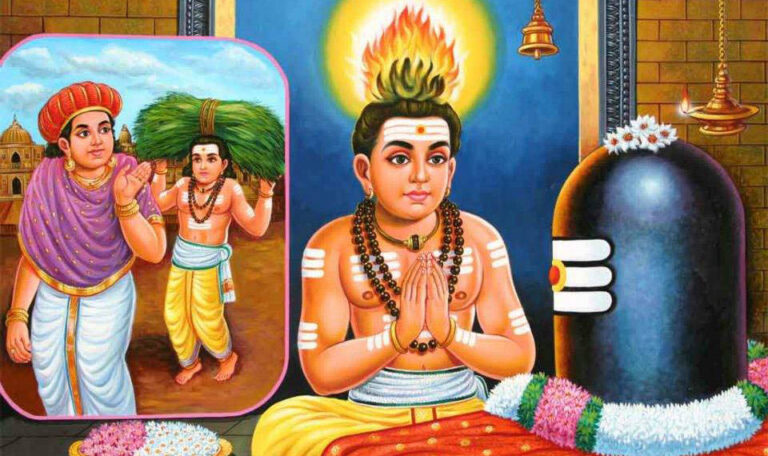
Perumizhalai Kurumba Nayanar
Perumizhalai Kurumba Nayanar is the 22nd of 63 Nayanar saints of Hinduism. Traditional hagiographies like Periya Puranam (13th century CE) and Thiruthondar Thogai (10th century CE) describe him as a great devotee of the Hindu god Shiva. He was a follower of another Nayanar, Sundarar.
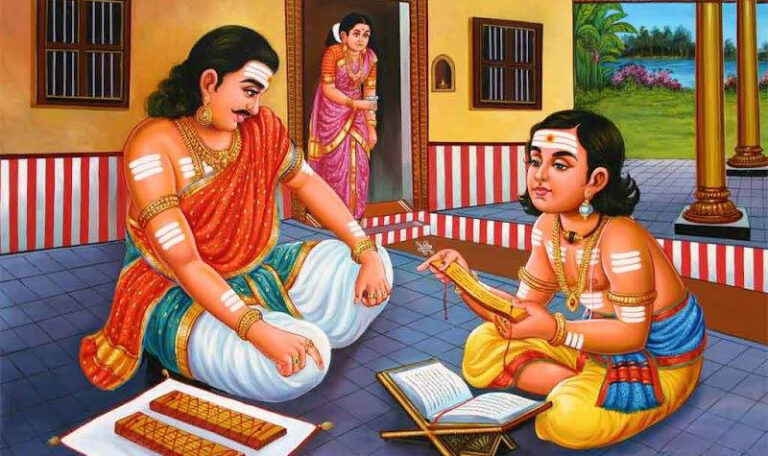
Karaikkal Ammaiyar
Karaikal Ammaiyar (born Punītavatī), meaning "The Revered Mother of Karaikal", is one of the three women amongst the 63 Nayanmars and one of the greatest figures of early Tamil literature. She was born in Karaikal, South India, and probably lived during the 5th century AD.[1] She was a devotee of Shiva.[2][3]
Apputhi Adigal
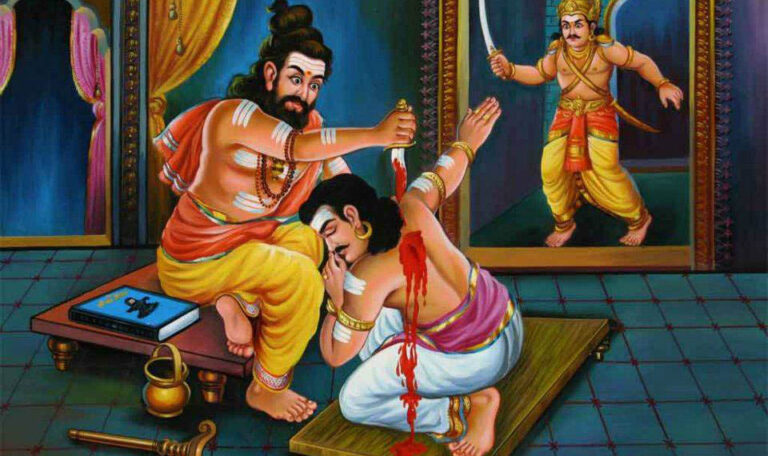
Apputhi Adigal, also spelt as Apputhi Adikal, Atputhi Adigal, Apputi Adigal, Appoodi Adikal, Appoothi Adikal and Appudhi Adigal and known as Appuddi Nayanar, was a Nayanar saint, venerated in the Hindu sect of Shaivism. He is generally counted as the twenty-fifth in the list of 63 Nayanars.[1] He is described as a contemporary of Appar or Thirunavukkarasar (first half of the 7th century CE), one of the most prominent Nayanars.
Tirunilanakka Nayanar
Tirunilanakka Nayanar (also spelt as Tiruneelanakka Nayanar and Thiru Neela Nakka Nayanar), also known Tiruneelanakka, Nilanakkar and Nilanakkan, was a Nayanar saint, venerated in the Hindu sect of Shaivism. He is generally counted as the twenty-eighth in the list of 63 Nayanars.[1] He is described as a contemporary of Sambandar (first half of the 7th century CE), one of the most prominent Nayanars.
Sambandar
Sambandar (Tamil: சம்பந்தர், romanized: Campantar), also referred to as Tirujnana Sambandar (Tamil: திருஞானசம்பந்தர், romanized: Tiruñāṉacampantar), was a Shaiva poet-saint of Tamil Nadu who lived sometime in the 7th century CE.[1][2] According to the Tamil Shaiva tradition, he composed an oeuvre of 16,000 hymns in complex meters, of which 383 (384) hymns with 4,181 stanzas have survived.[3] These narrate an intense loving devotion (bhakti) to the Hindu god Shiva. Sambandar died when he was sixteen years of age. The surviving compositions of the poet-saint are preserved in the first three volumes of the Tirumurai, and provide a part of the philosophical foundation of Shaiva Siddhanta.[2][3]
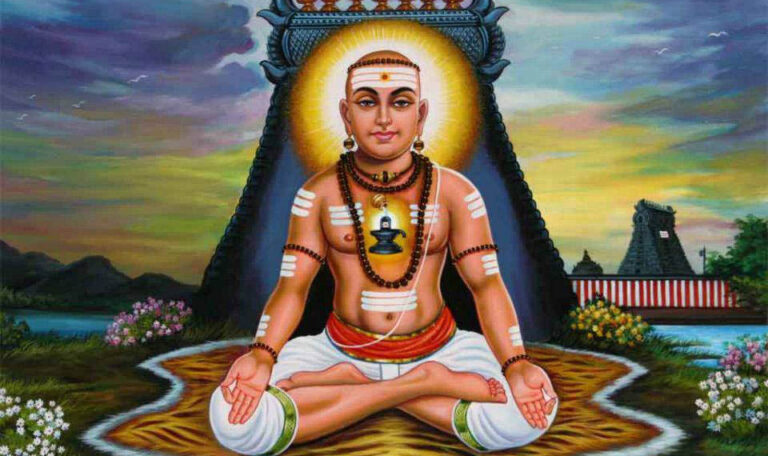
Eyarkon Kalikkama Nayanar
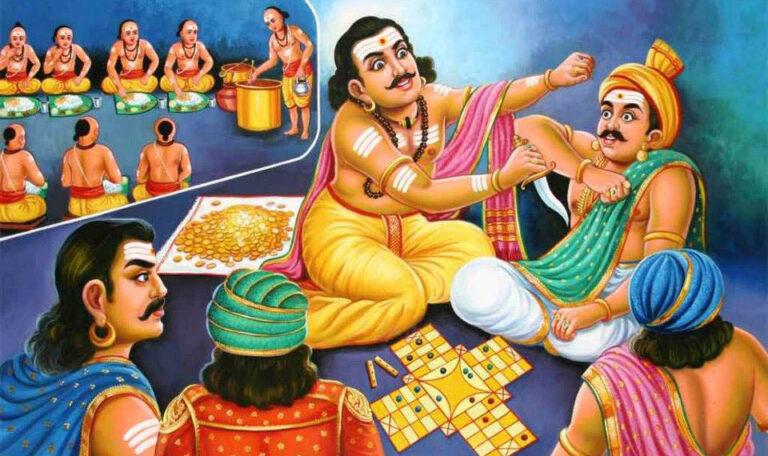
Tirumular
Tirumular (Tamil: திருமூலர், romanized: Tirumūlar), also known as Suntaranāthar, was a Tamil Shaivite mystic and writer, considered one of the sixty-three poet-saints called the Nayanars, and is listed among a group of 18 sages called the Siddhars. His magnum opus, the Tirumantiram, consisting of over 3000 verses, forms a part of the key text of the Tamil Shaiva Siddhanta compilation called the Tirumurai.
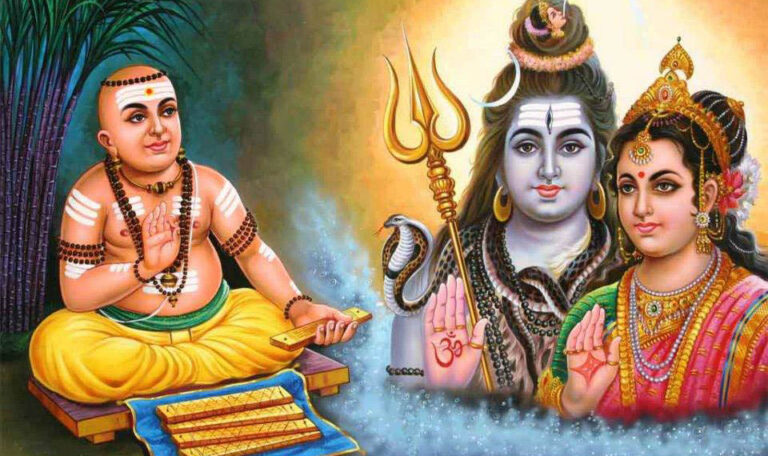
Dandi Adigal Nayanar
Dandi Adigal Nayanar or Dandiyadigal Nayanar is the 31st Nayanar saint. Traditional hagiographies like Periya Puranam (13th century CE) and Thiruthondar Thogai (10th century CE) describe him as a great devotee of the Hindu god Shiva.
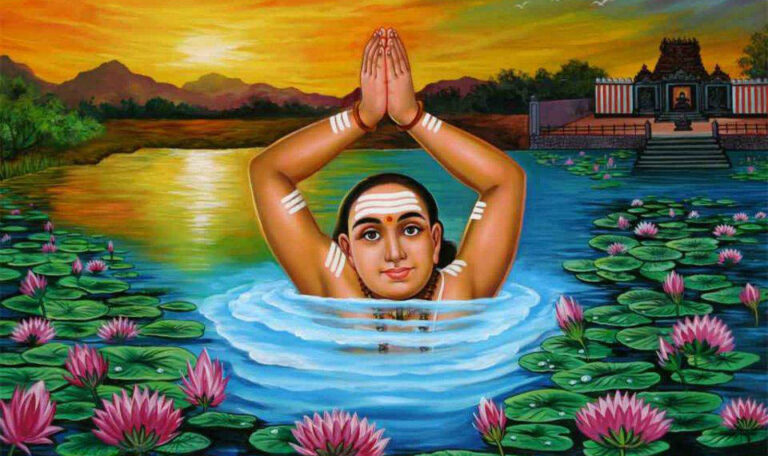
Somasi Mara Nayanar
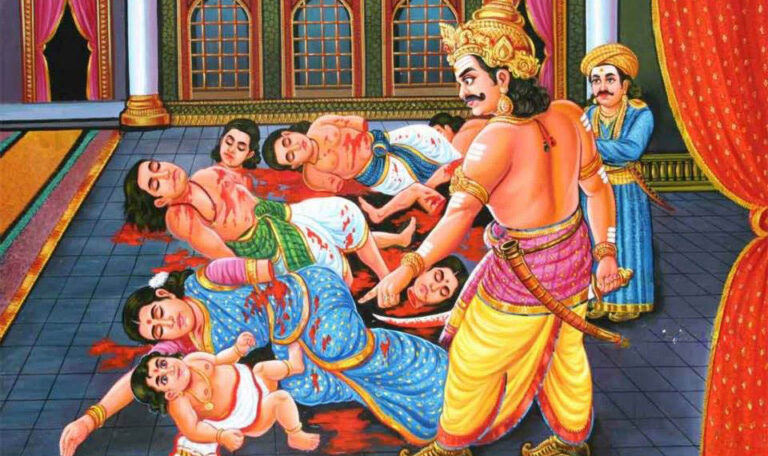
Somasi Mara Nayanar, also known as Somasi Maranar, Somasi Marar, Somasimarar and Somasira Nayanar, is a Nayanar saint, venerated in the Hindu sect of Shaivism. He is generally counted as the thirty-third in the list of 63 Nayanars.[1] He is also called Marar, Maran and Mara Nayanar, names he shares with Ilayankudi Mara Nayanar. The two Nayanars are generally differentiated by the prefixes "Somasi" and "Ilayankudi". He was a contemporary and devotee of Sundarar (7th century CE).
Sakkiya Nayanar
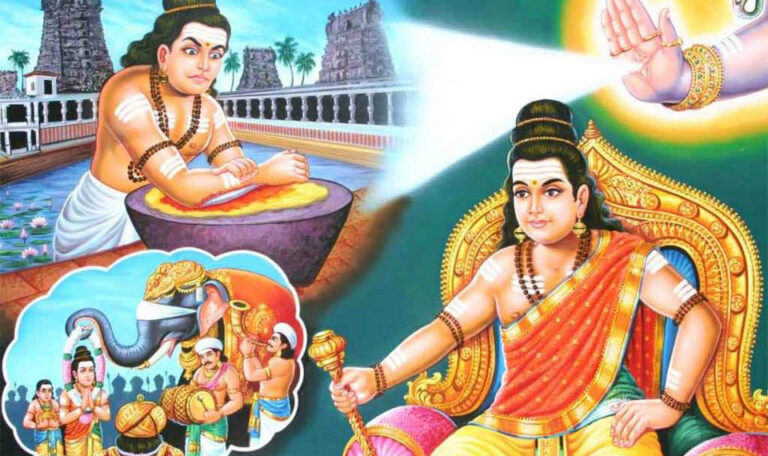
Sakkiya Nayanar (c. 7th century CE; known colloquially as Chakkiya Nayanar, Sakkiya, Chakkiya, Sakkiyar, Chakkiyar, and Sakkiyanar) was a Nayanar saint, venerated in the Shaiva sect of Hinduism. He is generally counted as the thirty-fourth in the list of 63 Nayanars. He was a Buddhist, who converted to Shaivism.[1]
Sirappuli Nayanar
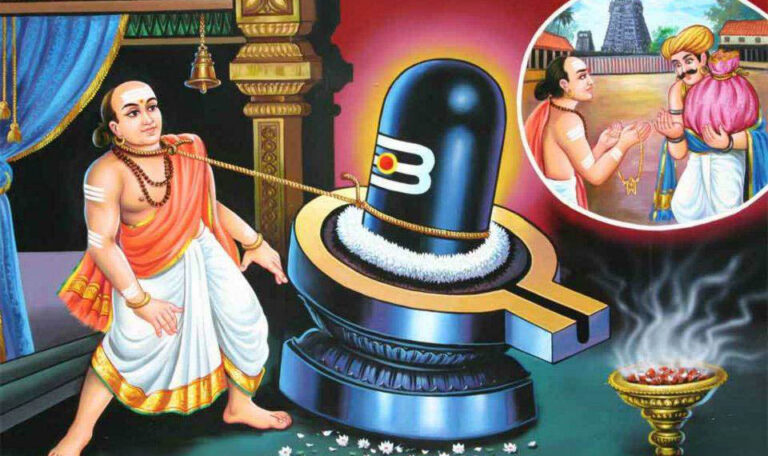
Sirappuli Nayanar, also known as Sirappuli (also spelled as Cirappuli, Chirappuli), Sirapuli Nayanar, Sirappuliyar (Chirappuliyar), was a Nayanar saint, venerated in the Hindu sect of Shaivism. He is generally counted as the thirty-fifth in the list of 63 Nayanars.[1] Sirappuli Nayanar is described to have served the devotees of the god Shiva and worshipped the god with various ritual practices.
Paranjothi
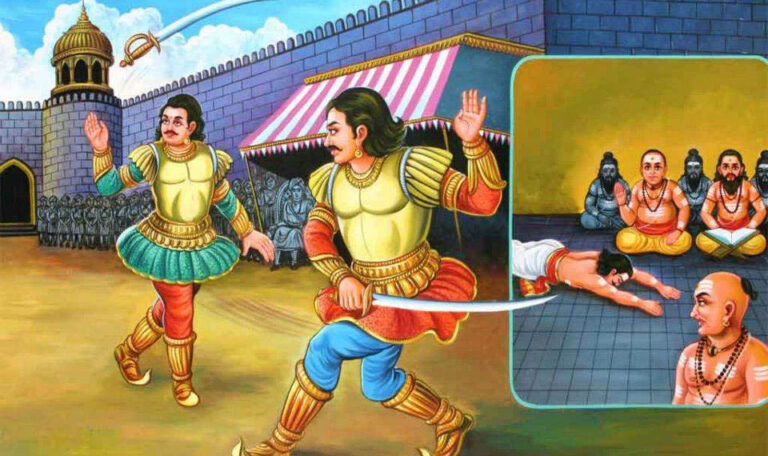
Paranjothi (Tamil: பரஞ்சோதி), popularly known as Sirruthondar was an army general of the great Pallava king Narasimavarman I who ruled South India from 630–668 CE. He also led the Pallava army during the invasion of Vatapi in 642 CE. In the later years of his life, Paranjothi gave up violence and became a wandering Saivite monk, Sirruthonda nayanar. He is venerated as one of the 63 Nayanmars.[1]
Cheraman Perumal Nayanar
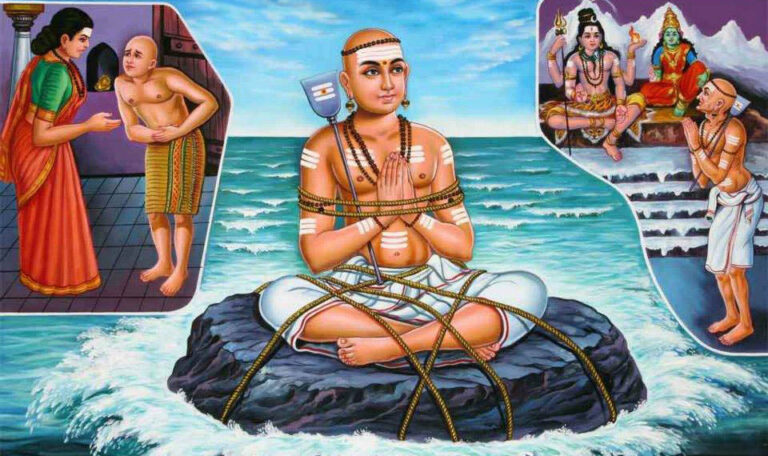
Cheraman Perumal Nayanar (Malayalam: ചേരമാൻ പെരുമാൾ നായനാർ; Tamil: சேரமான் பெருமாள் நாயனார்; literally meaning Chera king the Nayanar) was a bhakti poet-musician and religious teacher (one of the sixty-three nayanars) of Tamil Shaiva tradition in medieval south India.[1] The Cheraman Perumal's friendship with Sundarar, one of the 'Three Nayanars', is celebrated in the bhakti tradition.[2] The legend of the Cheraman Perumal is narrated in the hagiographic Periyapuranam, composed by Chekkizhar, a courtier of Chola Kulottunga II, in mid-12th century AD. The collection is based on an earlier work by Nambiyandar Nambi (10th-11th centuries AD).[3][4] Thiruvanchikulam Siva Temple in Kodungallur is associated with the Perumal and Chundaramurtti Nayanar.[5]
Gananatha Nayanar
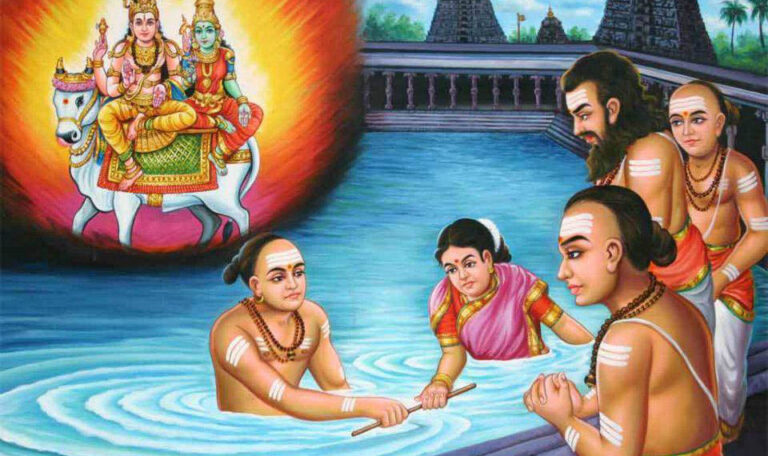
Gananatha Nayanar is the 37th Nayanar (saint). Gananatha means the head of the group of Gaṇas or the attendants of Shiva and live in Kailasa (the soldiers of the Shiva) at the abode of the Omnipresent.[citation needed] This pious Shiva devotee was born in a traditional Brahmin family in Sirkazhi. His love towards Toniappar was overwhelming; his faith was surplus and his devotion towards the services of Toniappar was powerful. He enjoyed in rendering a variety of services and also engaged himself in discussing the glory of Toniappar.[1]
Kutruva Nayanar
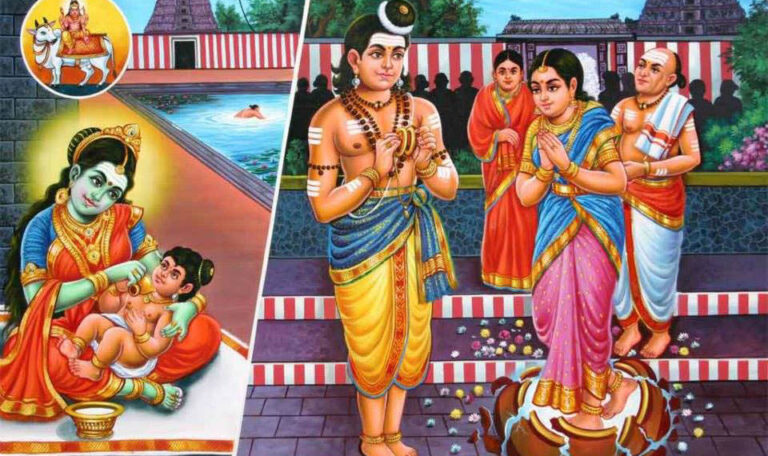
Kutruva Nayanar, also known as Kootruva , Kutruva, Kutruvar, Kootruvar, Kurruva Nayanar, Kurruvar, Kurruvan, Kutruvanar, Kurrrruvar and Kalappalar, was a chieftain of Kalandai and a Nayanar saint, venerated in the Hindu sect of Shaivism. He is generally counted as the 39th in the list of 63 Nayanars. Kutruva is often described as a Jain, who became a devotee of Shiva, the patron god of Shaivism.[1]
Pugal Chola
Pugal Chola, also known as Pukal Chola, Pukazhchozha Nayanar, Pugazh, Pukazhcchozhar, Pukal Cholan and Pugal Chola Nayanar, is described as a Chola ruler and was a Nayanar saint, venerated in Shaivism, one of the main sects of Hindu. He is generally counted as the eighth in the list of 63 Nayanars.[1]
Narasinga Muniyaraiyar Nayanar
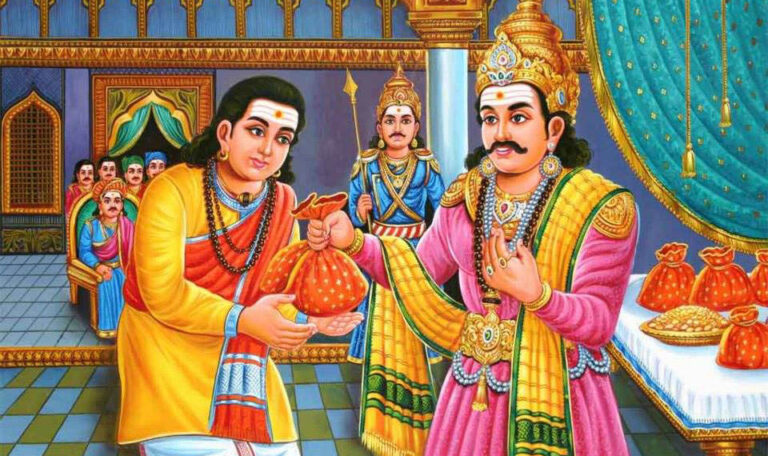
Narasinga Muniyaraiyar Nayanar is the 40th Nayanar saint.[1] Traditional hagiographies like Periya Puranam (13th century CE) and Thiruthondar Thogai (10th century CE) detail his legendary life and services to the Hindu god Shiva.Narasinga Muniyaraiyar Nayanar was the chieftain of the state Tiru Munaipadi.Muniyaraiyar The saint was a contemporary of Sundarar.
Adipaththar
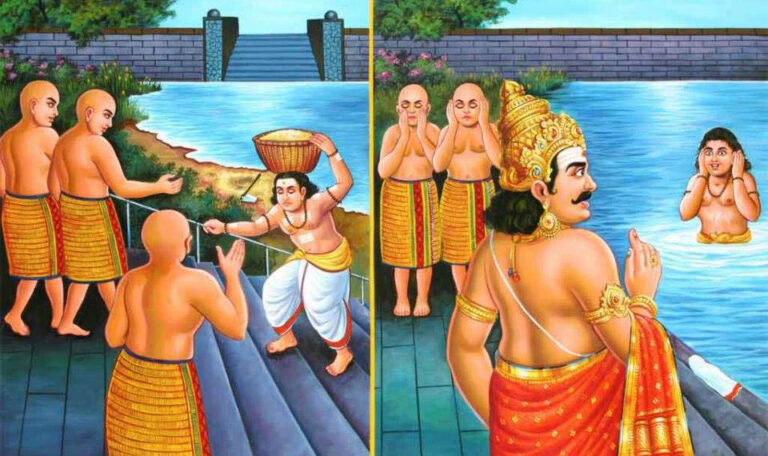
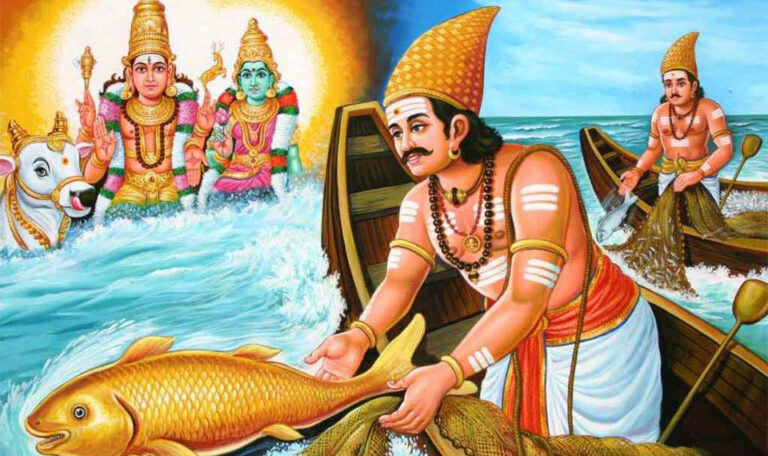
Adipatthar or Adhipattha Nayanar is one of the 63 Nayanmars. He was a sincere devotee of Shiva and lived in the Chola kingdom at present day Nagapattinam (referred in Sangam literature as Naagai) by the sea shore.
Kalikamba Nayanar
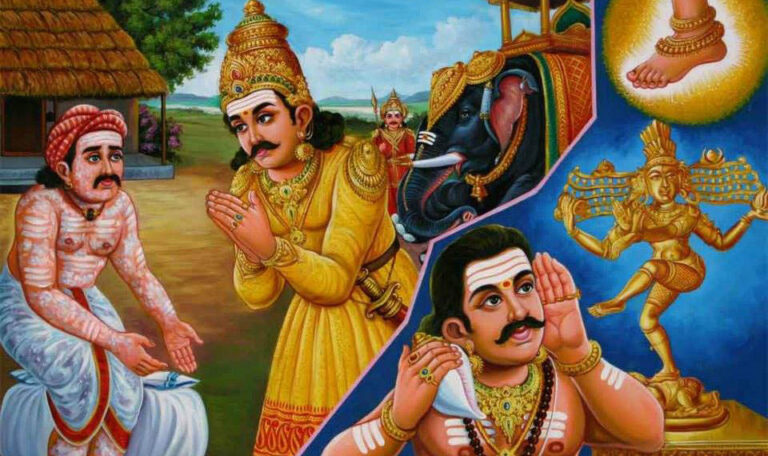
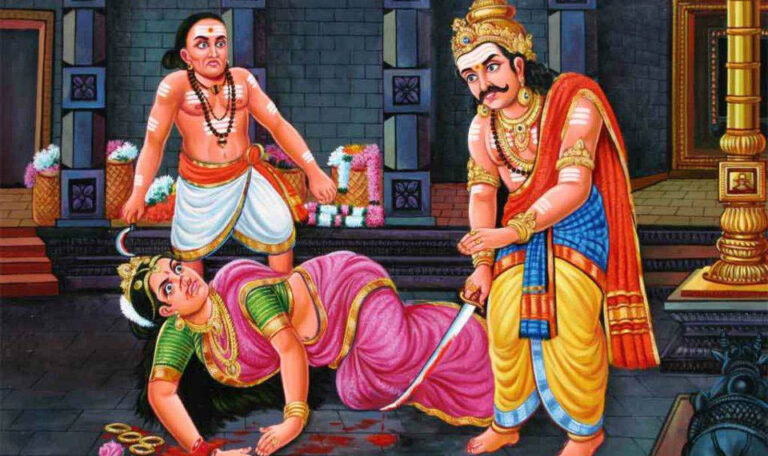
Kalikamba Nayanar, known as Kalikkamba, Kalikamba, Kalikambar, Kaliyamba, Kalikkambar, Kalikkampa(r), Kali Kambanar, Kalikkampa Nayanar and Kaliyamba Nayanar(u), is a Nayanar saint, venerated in the Hindu sect of Shaivism. He is generally counted as the forty-third in the list of 63 Nayanars. His hagiography speaks about how he cut the hand of his wife, who did not help in serving a Shaiva, devotee of the god Shiva.[1]
Kaliya Nayanar
Kaliya Nayanar, also known as Kalia Nayanar, Kalia, Kaliya, Kaliyanar and Kaliyar, is a Nayanar saint, venerated in the Hindu sect of Shaivism. He is generally counted as the forty-fourth in the list of 63 Nayanars.[1] The Nayanar saint is described to serve the god Shiva by lighting lamps in his Thyagaraja Temple. He is said to have been willing to cut his throat to fill the lamps with his blood, when he ran out of oil.
Satti Nayanar
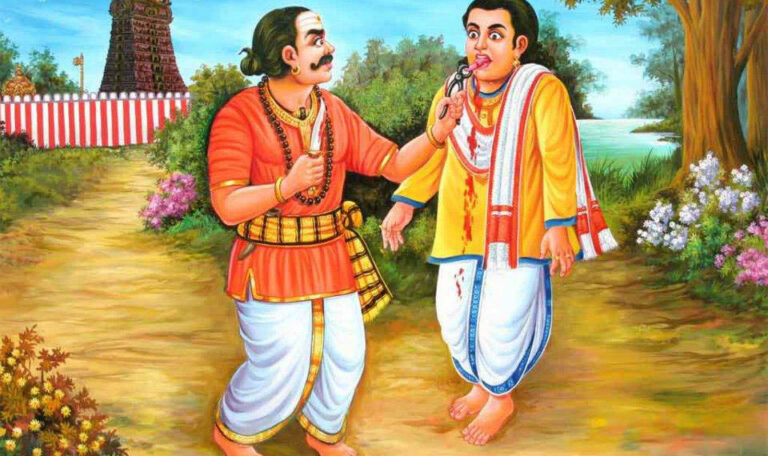
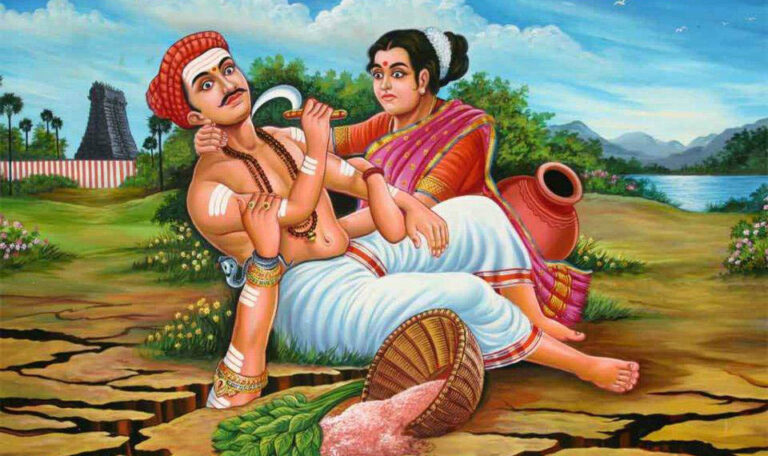
Satti Nayanar (Shatti Nayanar, Chaththi Nayanar), also known as Satti (Sathi), Sathiyar, Shakti Nayanar, Shakti, Shaktiyar (Saktiyar), Sattiyandar and Thiru-Saththi Nayanar, is a Nayanar saint, venerated in the Hindu sect of Shaivism. He is generally counted as the 45th in the list of 63 Nayanars.[1] Satti Nayanar is described to cut off the tongue of whoever talked ill of his patron god Shiva or Shiva's devotees.
Aiyadigal Kadavarkon Nayanar
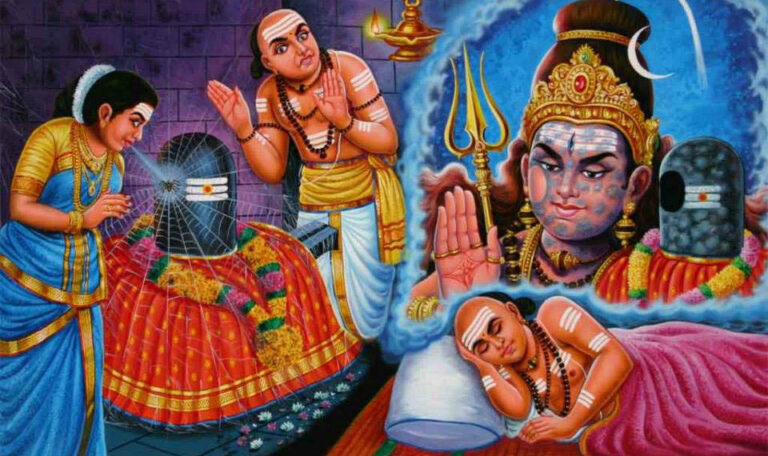
Aiyadigal Kadavarkon, was a ruler of the kadava dynasty and was ruling from Kanchipuram. Later he became the 46th Nayanar Saint in Tamil Nadu.
According to Sujit Mukherjee the saint king appears to have been a Pallava King, Simma Varman (c. 550–575).[1] The Encyclopedia of Saivism [2] identifies the term Kadavar with Pallava dynasty and the Tamil term kon as king.
Kanampulla Nayanar
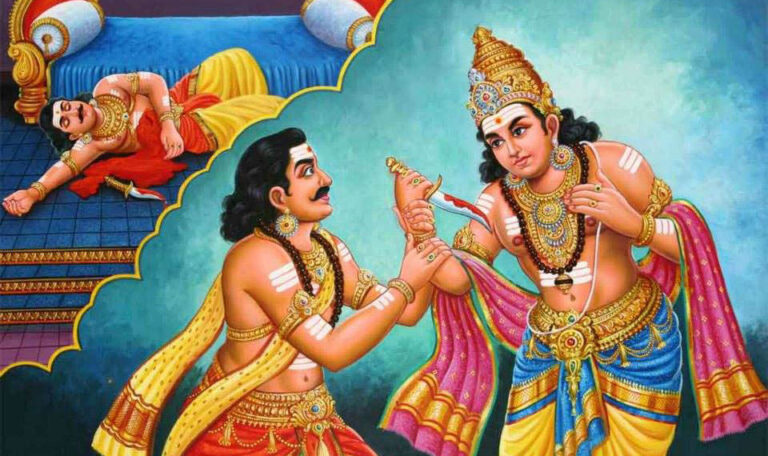
Kanampulla Nayanar is the 46th Nayanar saint. Traditional hagiographies such as the Periya Puranam (13th century CE) and Thiruthondar Thogai (10th century CE) describe him as a great devotee of the Hindu god Shiva.
Kanampulla Nayanar was a grass cutter; selling the special Kanampul grass used for lamp wicks in Shiva temples. Because of this Kanampul has become associated with his name.[1]
Kari Nayanar
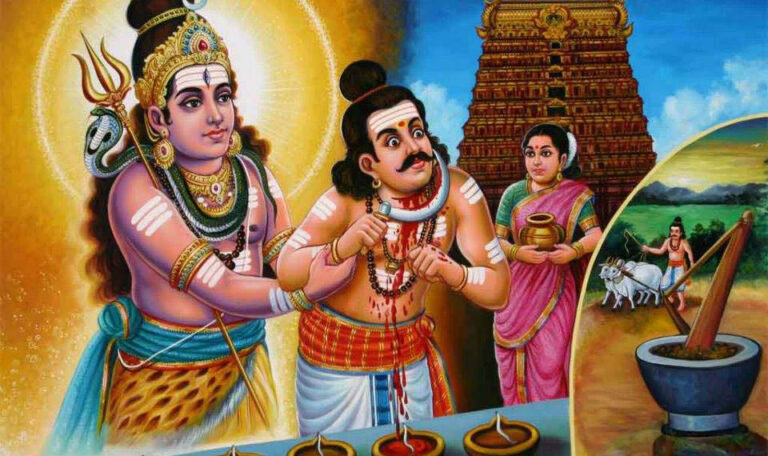
Kari Nayanar is the 47th Nayanar saint.[1] Traditional hagiographies like Periya Puranam (13th century CE) and Thiruthondar Thogai (10th century CE) detail his legendary life and services to the Hindu god Shiva. Kari Nayanar was a vedic Brahmin devotee as well as a Tamil poet with an understanding of Sanskrit. The poet-saint compiled the vedic truths in Kovai(Anthology), a Tamil composition titled Karikkovai. This book is now considered lost. [2][3] Therefore the saint got the name as Kari Nayanar.
Koon Pandiyan
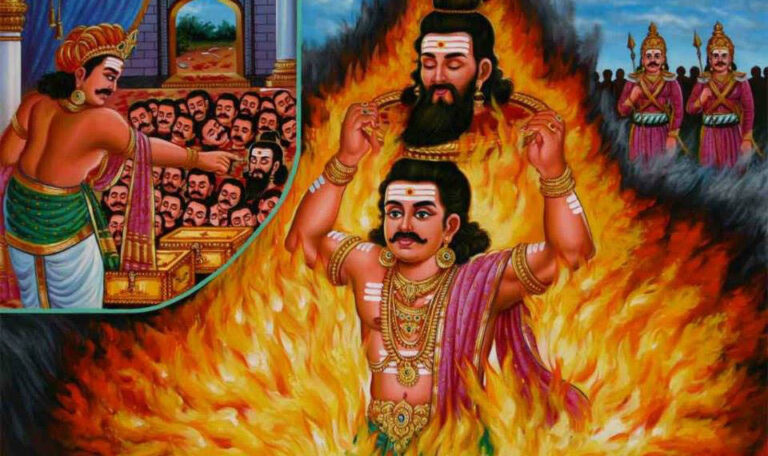
Koon Pandiyan ("The hunch-backed Pandyan") (Tamil: கூன் பாண்டியன்) was the nickname of a king who ruled Madurai around 7th century. Some historians identify him with the Pandyan king Arikesari Parankusa Maravarman.[2]
He converted from Jainism to Shaivism, converted under the influence of Sambandar. According to a Shaivite legend, after his conversion, he ordered a massacre of 8000 Jains in Samanatham. Sambandar is said to have cured his hunched back, after which he was known as Sundara Pandya ("Beautiful Pandyan").[3]
Mangayarkkarasiyar
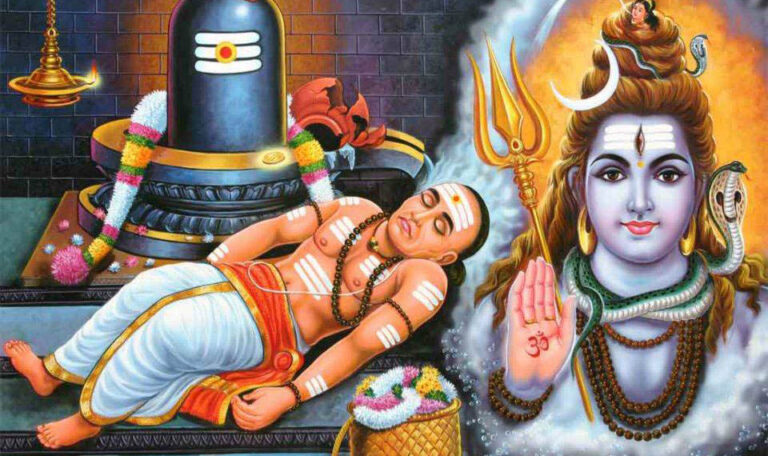
Mangayarkkarasiyar (Tamil:மங்கையர்க்கரசியார்) was one of the 63 Nayanmars or holy Saivite saints who are revered in South India. She is one among the only three women who attained this distinction. Her devotion to Lord Shiva is recounted in the hagiographic poem Periyapuranam compiled by Sekkizhar as well as in the Tiruthondar Thogai written by the poet-saint Sundarar.
Vayilar
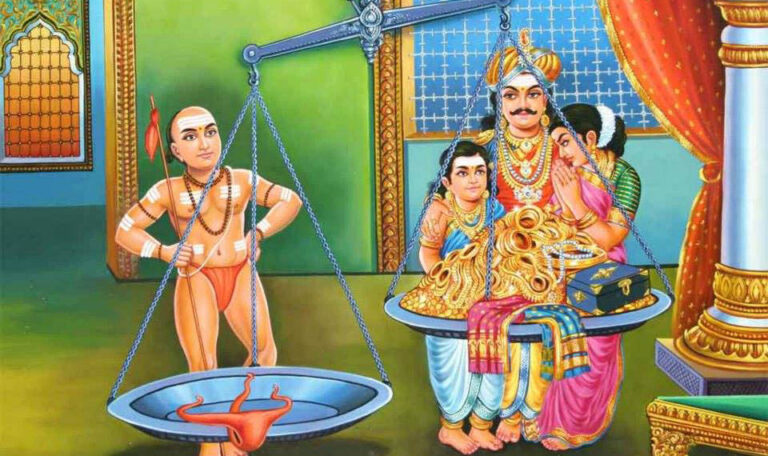
Vayilar (literally "The Voiceless One"),[1] also known as Vayilan, Vayila Nayanar, Vayilar Nayanar and Vayilar of Mayilai, was a Nayanar saint, venerated in the Hindu sect of Shaivism. He is generally counted as the fifty-first in the list of 63 Nayanars.[2] He is said to worshipped the god Shiva, his patron, by his Mind and built a grand temple for him in his mind.
Munaiyaduvar
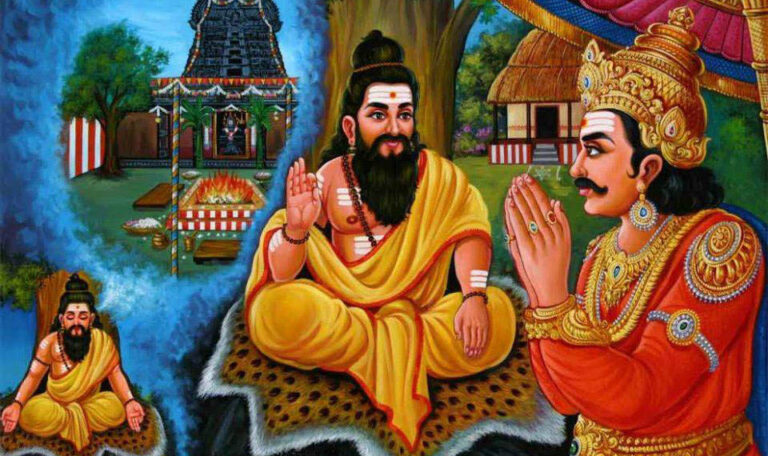
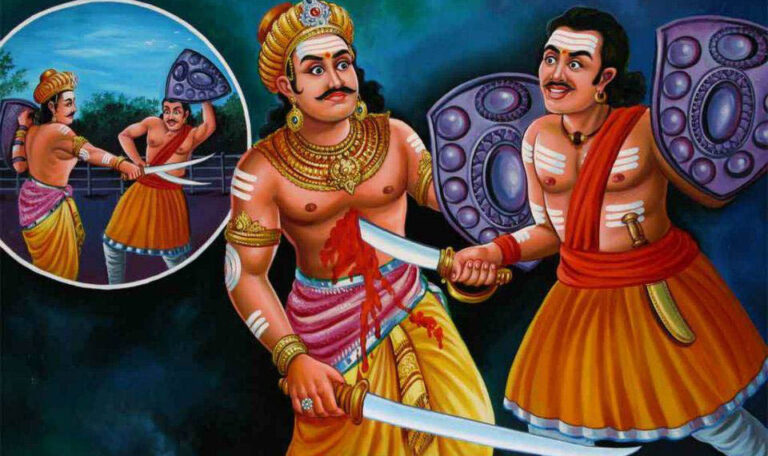
Munaiyaduvar, also known as Manai Aduvar Nayanar, Munaiyaduvar Nayanar, Munayaduvar, Munayaduvaar, Munaiyaduvaar and Munaiyatuvar, was a Nayanar saint, venerated in the Hindu sect of Shaivism. He is generally counted as the 52nd in the list of 63 Nayanars.[1] Munaiyaduvar is described as a mercenary soldier, who would fight for the weak and vanished and use the fees received in service of his patron deity Shiva and the god's devotees.
Kalarsinga Nayanar
Kalarsinga Nayanar, also known as Kalarsinga, Kazharsinga, Kalarcinkan, Kalarsingan, Kalarsinganar, Kalarsingar, Kalarcingar and Kalar-chingar (Kalar-singar), was a Nayanar saint, venerated in the Hindu sect of Shaivism. He is generally counted as the fifty-fifth in the list of 63 Nayanars.[1] While his identity remains a matter of debate, many scholars identity Kalarsinga Nayanar as the Pallava king Narasimhavarman II (Rajasimha), who reigned between 700 and 728 CE.
Idangazhi
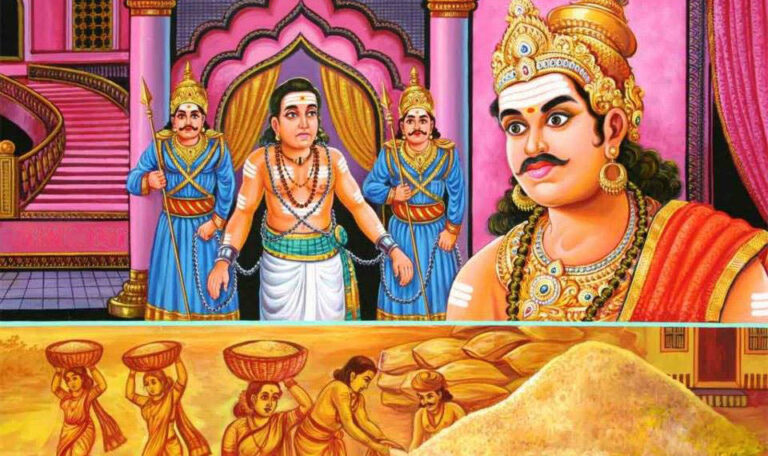
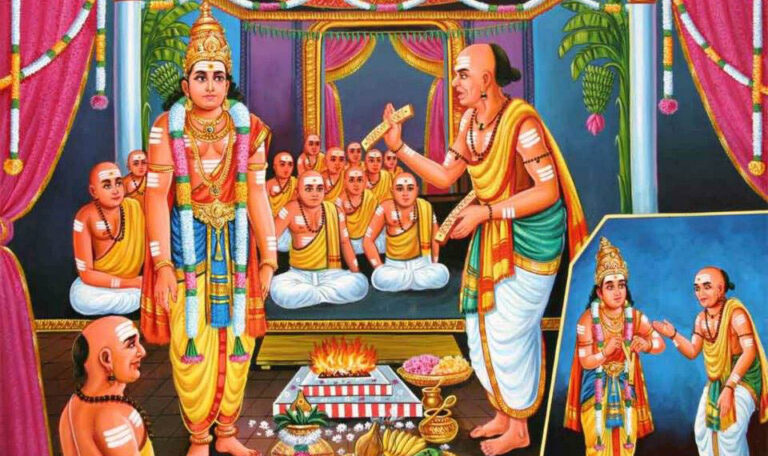
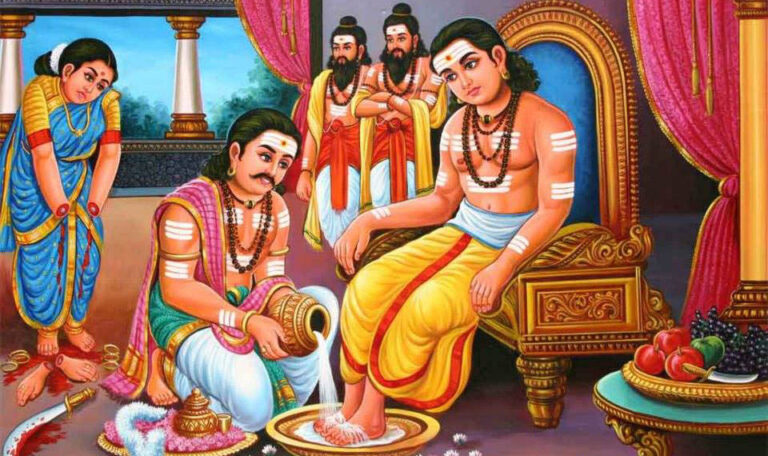
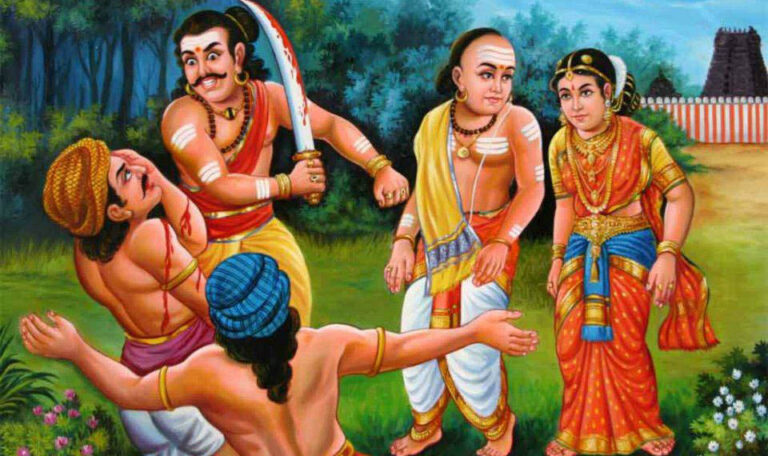
Idangazhi (Idangali), also known as Idangazhi Nayanar (Idankali Nayanar), Idangaliyar (Idankaliyar) was a Nayanar saint, venerated in the Hindu sect of Shaivism. He is generally counted as the fifty-fourth in the list of 63 Nayanars.[1] He was an Irukku Velir chieftain, who is described to not only have pardoned a devotee of the god Shiva, who stole from the royal granaries, but also distributed rice to devotees of Shiva.[2][3]
Pusalar
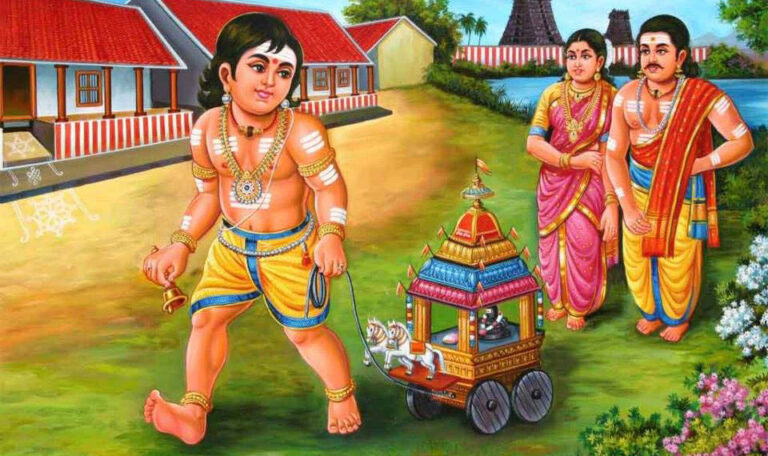
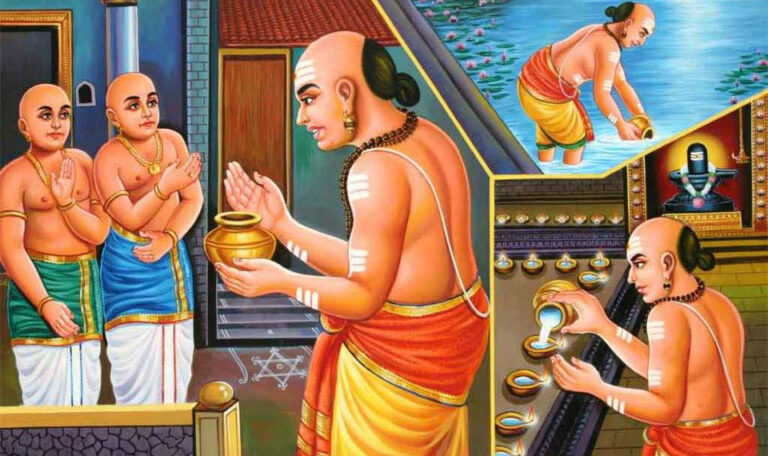
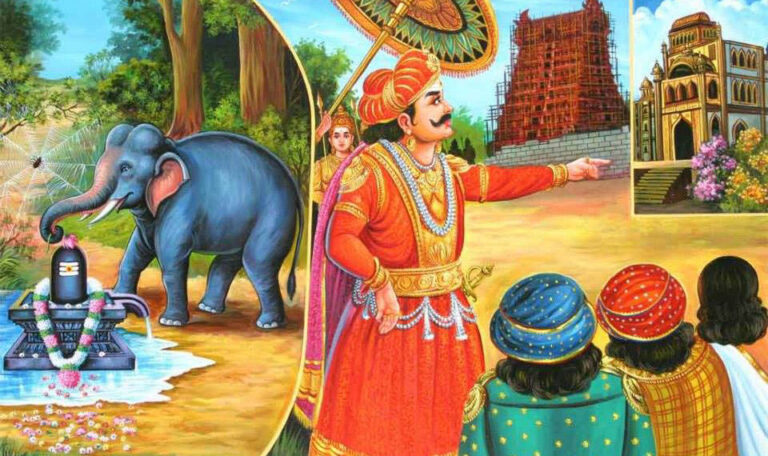
Pusalar (also transliterated as Pūcalār, Pusala or Poosalar) is an eighth-century Nayanar saint, venerated in the Hindu sect of Shaivism. He is generally counted as the fifty-eighth in the list of 63 Nayanars.[1] His hagiography speaks how he created a grand temple for Shiva in his mind and how his patron god Shiva preferred attending the consecration of his mind temple, instead of a grand temple created by a Pallava king.
Nesa Nayanar
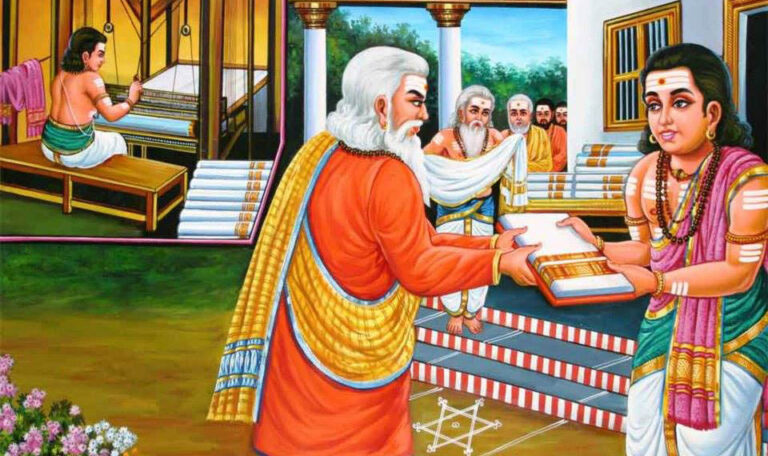
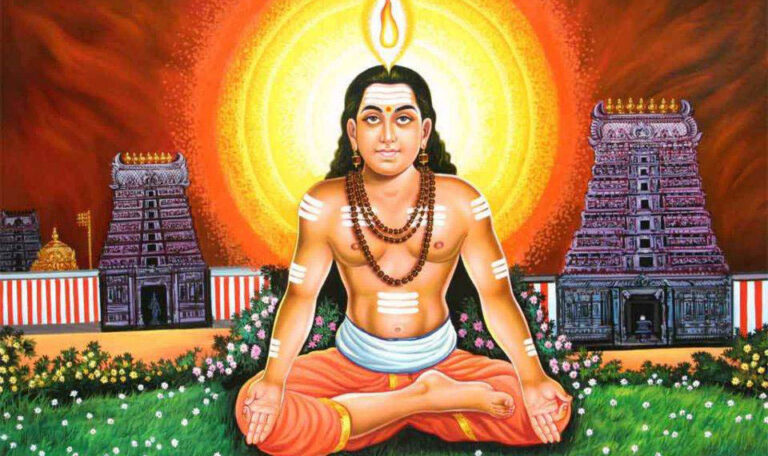
Nesa Nayanar, also known as Sivanesa Nayanar, Neca Nayanar (Necha nayanar), Nesanar, Nesar and Nesan (Necan), was a Nayanar saint, venerated in the Hindu sect of Shaivism. He is generally counted as the fifty-ninth in the list of 63 Nayanars.[1] Nesa Nayanar is described to be a weaver, who was always engrossed in remembering his patron god Shiva and gifting clothes he knit to devotees of the deity.
Kochchenganan
Kochchenganan (Kōccengaṇān[1]) Kochengat Cholan or Śengaṇān[1] (also spelt Senganan[2])(Tamil: சோழன் செங்கணான்) was one of the Tamil kings of the Early Cholas mentioned in Sangam literature. The only surviving details about his reign come from the fragmentary poems of Sangam in the Purananuru poems. Today historical accounts of the life of Kochchenganan are often confused with more contemporary accounts. It is believed that present-day places Chengannur, meaning Senganan's Town, and Changanassery, meaning Senganan's Road are named after him.
He is known for building the Jambukeshwarar Temple in present-day Trichy.
Tiru Nilakanta Yazhpanar

Tiru Nilakanta Yazhpanar was a Nayanar saint, venerated in the Hindu sect of Shaivism. He is generally counted as the sixty-first in the list of 63 Nayanars.[1] While the first part of his name can be spelt as Tirunilakanta, Tirunilakantha, Tiru Neelakanta, Tiru Nilakanta, Nilakantan and Thiruneelakanda, Yazhpanar is spelt as variously as Yalppanar, Yalapannar, Yalpanar and Yazhpaanar. He is described as a companion of Sambandar (first half of the 7th century CE), one of the most prominent Nayanars.
Sadaiya Nayanar
Sadaiya Nayanar or Sadaiyar[note 1] is a 7th century Nayanar saint in the Hindu sect of Shaivism, venerated for being father of the prominent saint Sundarar rather than for individual merit.[1] He and his wife Isaignaniyar are generally counted as sixty-second and sixty-third on the list of the sixty-three Nayanar saints.[2] Sundarar is the only Nayanar with both parents venerated.
Sadaiya Nayanar
Sadaiya Nayanar or Sadaiyar[note 1] is a 7th century Nayanar saint in the Hindu sect of Shaivism, venerated for being father of the prominent saint Sundarar rather than for individual merit.[1] He and his wife Isaignaniyar are generally counted as sixty-second and sixty-third on the list of the sixty-three Nayanar saints.[2] Sundarar is the only Nayanar with both parents venerated.